
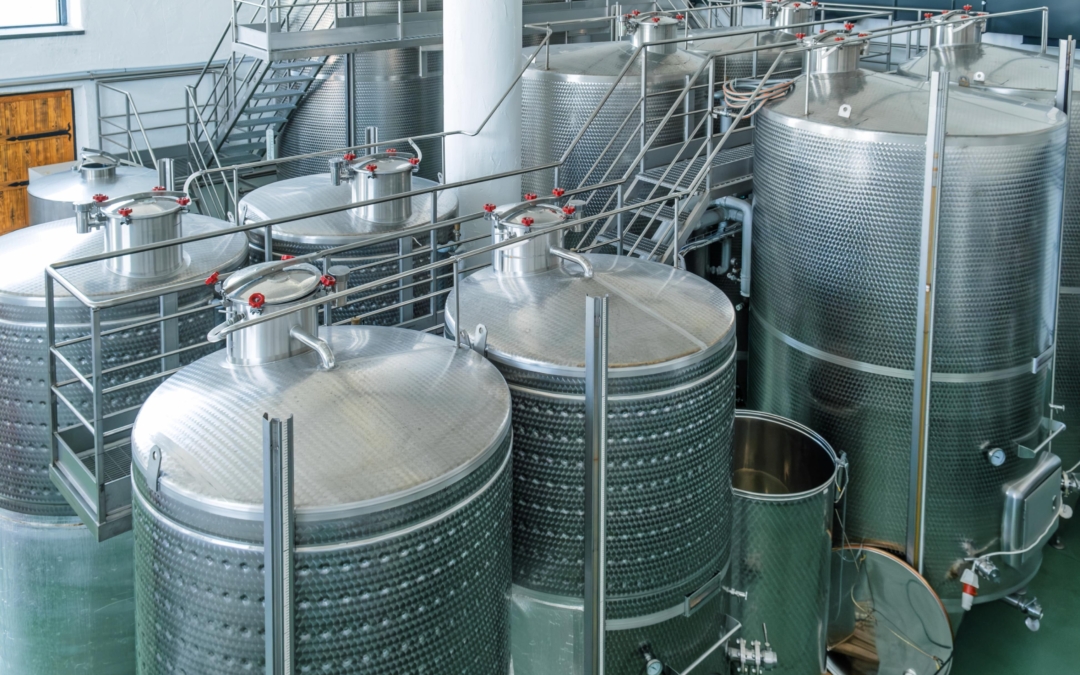
Water Treatment for Food and Beverage Manufacturing
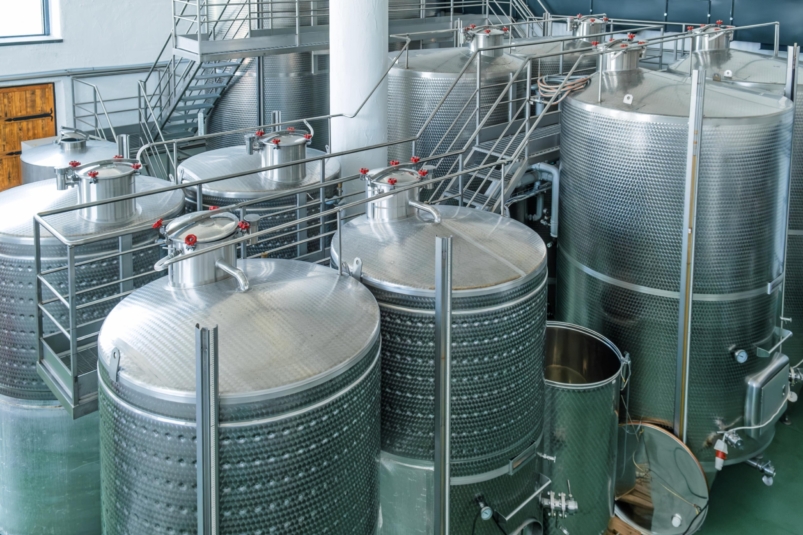
Scale and corrosion in plant water systems can interrupt production and increase maintenance costs. Changes in water quality and operating conditions can make treatment harder to control.
At ProChemTech, we help food and beverage plants protect equipment and control water costs. Our treatment programs support reliable production and help your team reduce unnecessary water use.
Read on to learn more about our proprietary processes for food and beverage manufacturing water treatment.
Get a Quote for Food and Beverage Manufacturing Water Treatment
Sanitary Water Requirements in Food and Beverage Manufacturing
Food and beverage plants use water as an ingredient, as a cleaning medium, and to wash, rinse, and convey food. FDA Current Good Manufacturing Practice rules in 21 CFR Part 117 set sanitary requirements for this water:
- Contact water: Any water that touches food, food-contact surfaces, or food-packaging materials must be safe and of adequate sanitary quality.
- Wash and conveyance water: Water used to wash, rinse, or convey food may be reused only if it does not cause allergen cross-contact or increase contamination of the food.
- Running water: Plants need running water at a suitable temperature, and under pressure as needed, wherever food processing or the cleaning of equipment, utensils, and packaging requires it.
- Contamination control: Plumbing size, design, installation, and maintenance cannot allow the system to contaminate food, water supplies, equipment, or utensils or create an unsanitary condition.
- Backflow prevention: Wastewater and sewage lines may not backflow into, or cross-connect with, lines that carry water for food or food manufacturing.
Many food plants use boiler steam to sanitize equipment and heat food directly. FDA regulation 21 CFR 173.310 limits the boiler treatment chemicals allowed in steam with food contact. The table in the boiler section below lists four of those limits.
ProChemTech Food Processing Water Treatment
ProChemTech supplies water treatment for food and beverage manufacturing as a single source for chemistry, equipment, and on-site service. Our water treatment for beverage plants covers boiler and cooling water at breweries and wineries. Dairies and food preparation facilities use the same boiler and cooling programs along with our wastewater treatment equipment and chemicals.
In each of these plants, the boiler supplies process water, direct heat, and sanitizing steam, so our boiler program protects all three. We have also designed cooling systems for food production. Our work at food and beverage plants covers chemical production, control equipment, and field service:
- In-house manufacturing: We manufacture chemical products, control systems, and treatment systems in-house to custom specifications.
- Chemistry selection: Treatment chemistry is selected from each system’s makeup water quality, contaminants, and operating conditions.
- Automated control: Chemical control equipment allows for less maintenance time on boiler and cooling water systems by providing the exact dose of chemical right when it’s needed. Control systems can also have web-based remote monitoring to provide information to management in real time or to remote teams.
- On-site service: Technicians test system water at regular intervals and adjust dosages to keep chemistry from running too low or too high.
- Regional coverage: We have a Manufacturing facility in Brockway, Pennsylvania, and another in Apache Junction, Arizona, allowing us to provide local support and chemistry to our customers on the East and West coasts.
Boiler Water Treatment for Food Processing
Boilers supply direct heat and sanitizing steam to food plants, so a boiler failure can stop production for an undetermined period. Our published data show that 1/16 inch of scale from calcium, magnesium, silicon, and iron compounds cuts heat transfer efficiency by 11%. We remove residual oxygen with scavenger chemistry because uncontrolled oxygen pitting can perforate boiler tubes.
Foaming carries boiler water impurities out with the steam and into the process. Neutralizing amines protect condensate piping from carbonic acid by raising condensate pH to 8.0 to 8.5. FDA regulation 21 CFR 173.310 limits which amines may enter steam that contacts food and how much of each the steam may carry.
Selected amine limits under 21 CFR 173.310
|
Additive |
Maximum in steam (ppm) |
Contact with milk and milk products permitted |
| Cyclohexylamine |
10 |
No |
|
Diethylaminoethanol |
15 | No |
|
Morpholine |
10 | No |
| Octadecylamine | 3 | No |
Cooling Water Efficiency in Food and Beverage Plants
Raising cycles of concentration cuts the blowdown a cooling tower discharges and the makeup water needed to replace it. Hardness ions concentrate as cycles rise, so scale limits most towers to 2 to 4 cycles. Our Aqua Ionic program generally raises that limit to 8 to 10 cycles by softening the makeup water to remove hardness ions.
Routine testing of 17 cooling systems on Aqua Ionic returned no detectable Legionella. We attribute these results to operating pH above 9.2. The same high pH can corrode the zinc coating on galvanized steel. We feed GalvaGard into the cooling water to control white rust and protect galvanized steel components during high-pH operation.
Food Manufacturing Wastewater Treatment for Organic Loads
Food plant wastewater often carries high biochemical oxygen demand (BOD), total suspended solids (TSS), and fats, oils, and grease (FOG) from cleaning, rinsing, and processing. Municipal utilities may add surcharges when those concentrations exceed local thresholds. FOG can also solidify and block sewer pipes while causing expensive water bills.
Our laboratory analyzes a plant’s wastewater samples to identify the pollutants present and their concentrations. Bench-scale treatability testing then compares several chemistries to select the treatment for that wastewater. That treatment runs through our inclined plate clarifiers, which separate suspended solids from high-flow wastewater in a small footprint.
Water Reuse Opportunities for Food Processors
Treated wastewater can replace fresh water as cooling tower makeup, which may reduce or eliminate costs for makeup water, sewerage, effluent monitoring, and permitting. Zero-discharge tower operation on reused makeup can eliminate a facility’s process wastewater discharge. A reuse evaluation starts with a plant survey of wastewater quality and variability, cooling tower demand, and the cost of fresh makeup and sewerage.
Organic contamination in high-COD wastewater feeds microbes in the tower, so biological control requires more oxidizing biocide. Oil and grease in the reused water cement suspended solids into hydrophobic deposits that promote underdeposit corrosion. Both risks require designing the wastewater treatment process and the cooling water program together.
Food and Beverage Water Treatment Services from ProChemTech
Water treatment for food and beverage manufacturing helps protect equipment and reduce unnecessary water use. Reliable water systems help keep production on schedule and limit avoidable operating costs.
ProChemTech develops treatment programs around your plant’s water quality and operating needs. Our team provides ongoing support to help your staff manage treatment and respond to changing conditions.
Click below for a quote and to learn more about water treatment for food and beverage manufacturing.
Get a Quote for Food and Beverage Manufacturing Water Treatment